
Art as Sustenance
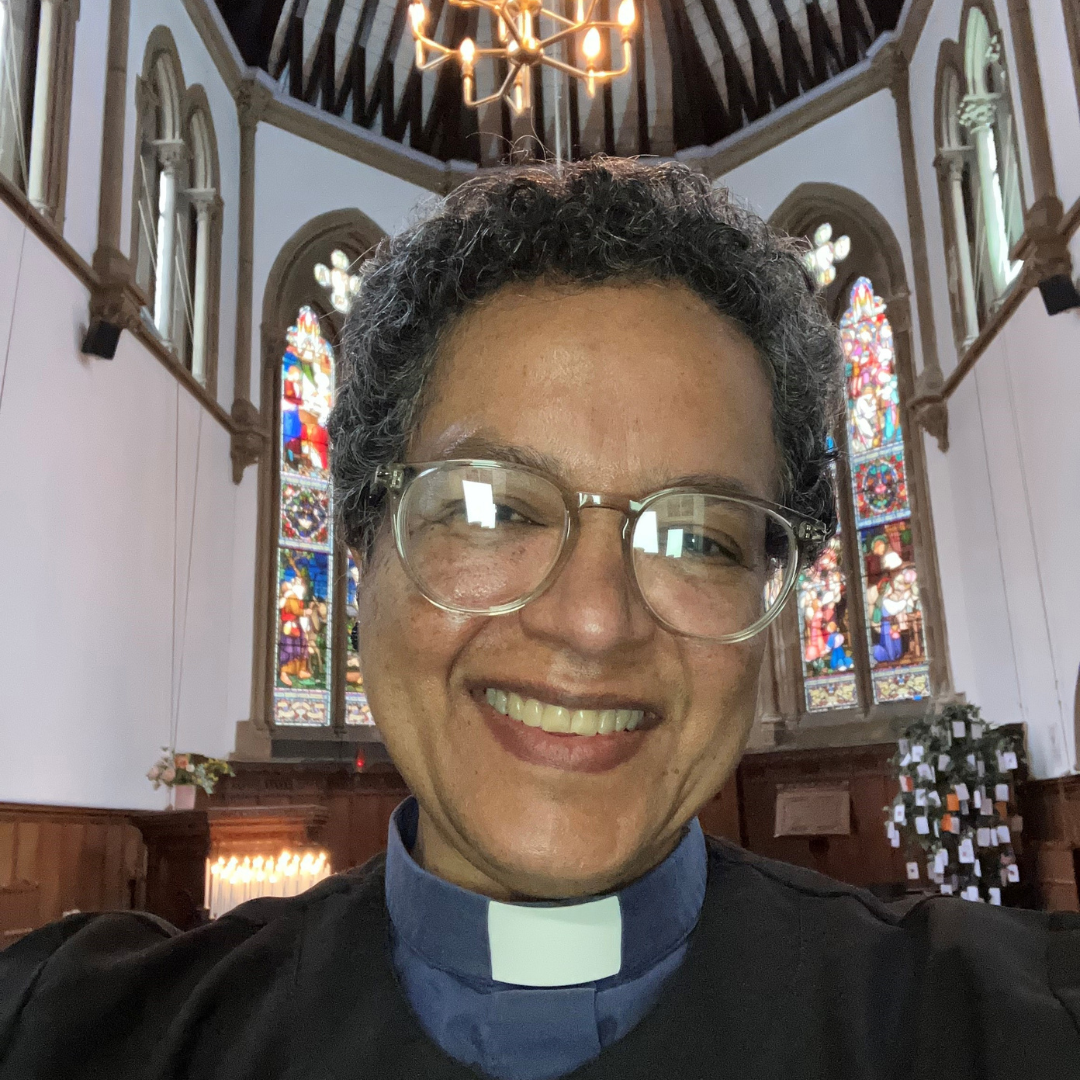
Revd Sonia Kasibante served as Trust Chaplain at the Leeds Teaching Hospitals from January 2020 to August 2025. She is now vicar at St Martin’s Church Potternewton and All Souls’ Blackman Lane.
I am writing this piece in the middle of August, two weeks before I finish my role as chaplain at the Leeds Teaching Hospitals. As the news of my appointment as vicar spread, someone at church said to me this morning, “You’re brave, going back into the parish.” Later, as I related the conversation to a companion, their response was, “And does that person think that chaplaincy is easy then?” Perhaps it is not what the person at church meant, but this has taken me back to the beginning of my time as chaplain, just over five and a half years ago. As I embarked on my stint as a hospital chaplain, I found that there seemed to be a common belief among my fellow clergy that chaplaincy was the “easy option”. It has truly baffled me throughout this time that anyone could believe this and could engage in constructing some kind of hierarchy of ministry. Our gospels and the letters of the New Testament have thoroughly addressed this issue.
There is an intensity to ministry as a hospital chaplain that, arguably, cannot be understood unless you are immersed in it. Chaplains are there for patients, visitors and staff, so it is not unusual for a chaplain to attend to a sad and shocking loss of, say, a baby and on the way back to the office, stop to hear the latest news which may be good or bad from a member of staff, or to summon a smile for a visitor when the said chaplain is feeling heartbroken and close to tears. It is not uncommon for a chaplain to have a substantial list of patients to see, all of whom wish to engage in deep talk of suffering, one after another, all in a day. Chaplaincy also provides an overnight on-call service for emergencies and so it is not uncommon for a chaplain to work a full day and have several calls overnight after which the chaplain reports for another day at work at 8am the following day. No, chaplaincy is not the “easy option.” It is, rather, a privilege and a blessing for the church to have a presence in this most diverse place, where profound questions about life and death are wrestled with daily.
This blessed option has served to open my eyes to the way God’s gracious gifts are used to sustain those who find themselves in the hospitals for one reason or another. It would be entirely fair if what comes to mind immediately when we speak of gifts in the hospitals, are the gifts of care from the nursing staff, the gifts of doctors and surgeons, the gifts of cooks and cleaners and porters, the gifts of physiotherapists and occupational therapists, the gifts of psychologists and social workers, the gifts of pharmacists and laboratory technicians, the gifts of ward clerks and many other staff who keep the hospitals ticking over seven days a week, 24/7. These are all acknowledged. Here, in this piece, however, I wish to highlight the gift of art in its many forms: paintings, pictures, sculptures, gardening, music and poetry.
That Which Is Given
It has been said that when ordinary human language falls short of expressing what we feel, we turn to art. This is why a piece of music can move us to tears, why we say, “A picture speaks a thousand words”, why a painting can keep us transfixed for ages, why a poem can simultaneously mystify and penetrate the depths of our being. The folk responsible for designing, building and decorating hospitals in our culture must have long recognised the power of art to express, inspire and heal. A few years ago, at the Hepworth Gallery I spotted this insightful note, “In 1953 Hepworth gave a lecture to a group of surgeons in which she outlined a connection between the work of doctors and artists: ‘The medical profession … seeks to restore and maintain the beauty and grace of the human mind and body;… The artist, in his sphere, seeks to make concrete ideas of beauty which are spiritually affirmative, and which, if he succeeds, become a link in the long chain of human endeavour which enriches man’s vitality and understanding, helping him to surmount his difficulties and gain a deeper respect for life.’
Here in Leeds, you cannot miss works of art all around the hospitals. Walk along the long corridors of the Leeds General Infirmary (LGI) and you will see a variety of exhibits: paintings of local buildings, floral depictions, fabric collages, portraits of people who have been involved in development or have benefited from treatment, wall paintings of sea creatures, extinct, fabled and fun creatures. Waiting for a lift in the same hospital on most of the levels, you will be treated to some fascinating mirror images on the floor and ceiling that can lift a person outside oneself to the universe of stars, sun and beyond.
Just recently, a patient excitedly pointed to a picture above her bed. “Look!” she said, “That’s near where I live!” She could hardly believe the coincidence – one that brought joy that shone in her face. It was a demonstration of how art made a difference to an individual who found herself in an alien environment where many feel disoriented, frightened and sad. St Luke’s Chapel has a particularly special place at the heart of the hospital, drawing a steady stream of visitors who cover the prayer tree with their prayer cards. The Chapel is often identified as a place of peace and calm, an oasis, at the centre of what can be, for many, a very difficult place to be. With its stained-glass windows portraying aspects of Christ’s healing ministry and aspects of his life, its walls soaked in prayers of many generations, the gift of another place that speaks through the beauty of its art is truly a blessing for all who use it on behalf of themselves and others.
There is much more to see around the LGI as well as at St James’ Hospital (Jimmy’s) and Chapel Allerton Hospital (CAH) – too much to cover in this piece. However, I cannot not mention, however briefly, some more of the incredible artwork. At Jimmy’s, note the regular exhibitions from local artists and the regular presence of a pianist in the Bexley Wing Atrium, the memory walk and gardens around the historic Workhouse Chapel, and developing gardens, sponsored by the RHS around the Trust Headquarters – all in aid of contributing towards the wellbeing of all who come to the hospital – patients, staff and visitors. At CAH, a garden transplanted from the Chelsea Flower Show has been added with stroke patients in mind and as I write other gardens are being developed on site as well. The art of gardens and gardening, and their place in wellbeing and healing are now a firm fixture at the heart of our hospitals.
What Chaplains Offer
Of course, where possible, we make use of all the above-mentioned gifts. But our unique contributions include music, pictures, and poetry (including prayer). Chaplaincy regularly facilitates visiting choirs at Christmas, and it is very moving to observe the positive effects on both staff and patients as people’s demeanours are transformed before our eyes as they hear a choir singing carols. I have also sung for and with patients at the bedside, hymns and worship songs when these are known to lift their spirits. (Though it might be a stretch to call my singing art!) Significantly, I have found myself using the poetry of the Psalms more than I ever have – both as an offering that speaks into the situation and in response to direct requests. I recall a few years ago, sitting with someone approaching the end of her life for whom the Psalms made it all bearable. As I finished reading one, she’d say, “Read me another”. I read from the Psalms for three hours as we waited for someone to arrive.
I have often found that a chaplaincy card offered opens up a good conversation, and brings the beauty of the outside world into a sterile or alien space. The cards bear pictures of beautiful scenery or a flower, and sometimes also include a poem or prayer. The pictures facilitate recollection of gardens, or memories from another time while prayers remind people of their faith – whether that be strong, residual, something they are struggling with or something they feel they’ve lost. Conversations may be brief and light or long and very deep. Arguably, more than anywhere else, the deepest conversations of people’s lives and their faith happen in hospital, when confronted with illness, particularly serious illness.
What We Receive
I can tell you that patients have made their own offerings in return – of artwork in the Bexley Wing Atrium, of music on the wards – there was one who brought her guitar in at Christmas, another who brought her ukelele and played for us, and yet another who shared gospel music from YouTube that was special to him. And then there was one who wrote copious amounts of poetry, beautiful verses, affirming everyone around her and changing lives. Here are a couple, included with her permission.
The Quiet Guardians
by Essoung Sandrine
The Imaging Team,
so patient and strong,
Capturing life in each sound of my song. With steady hands and hearts so kind, they bring clarity when answers are hard to find.
Through x-rays, scans, and gentle light, they reveal the truth, dispelling the night. With every image, every view,
they guide the way with what’s so true.
No dancers, no tricks,
just skill and care,
they’ve given me answers, beyond compare.
In quiet rooms where shadows may fall, The Imaging Team answers the call.
Merci pour votre cœur si grand,
Votre amour, un cadeau éclatant.
No, I cannot put into words all that I have received in my experience as a hospital chaplain. Maybe one day I will paint a picture or write a poem. For now, I say, “Thanks be to God for the gift of art with its power to give expression, to sustain and to encourage in the toughest of circumstances.”