
Homelessness and Home
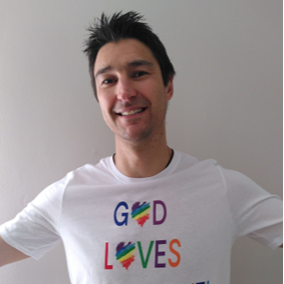
Rev Heston Groenewald is the vicar of All Hallows, Leeds. He loves ‘mixing freely with all people’ in inner-city life and ministry. He has been a Third Order Franciscan for about 15 years.
‘St George’s Crypt are full!’ This is a constant refrain in our community café. St George’s Crypt is amazing, and is bursting at the seams. As financial inequality forces more and more people into struggle and poverty, the Crypt’s work is more vital than ever - and more challenging than ever.
And so, through the depths of winter, churches around Leeds offered them a little support: taking turns to serve as overflow emergency night shelter. For a week each, we teamed up with the brilliant Street Outreach Team and local councillors, to offer breakfast and dinner and warm safe space overnight, usually to around 10 men.
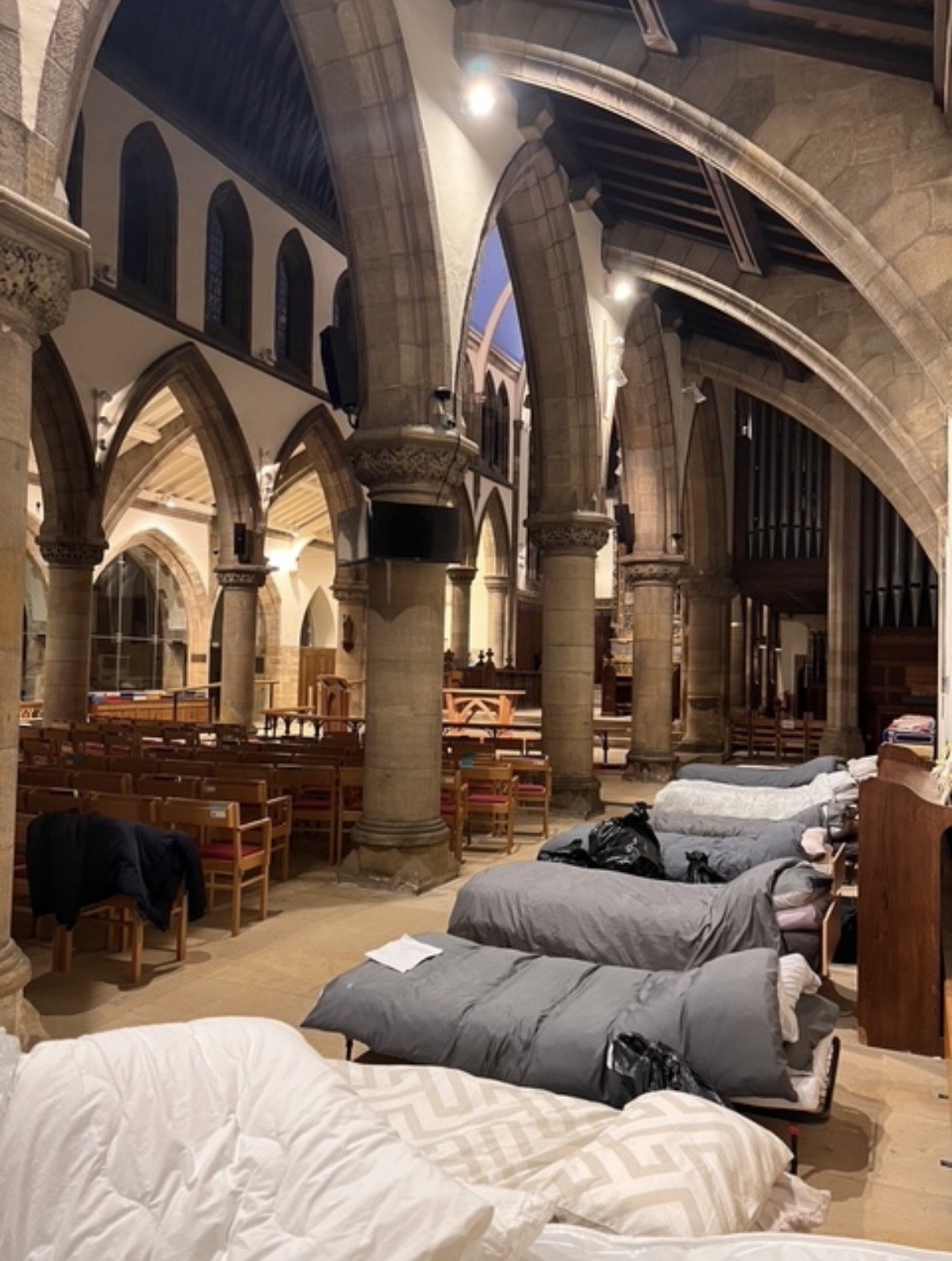
It’s very ancient Christian wisdom that the poor are our teachers. So no surprises that this week was full of lessons. Important lessons, but not happy or easy lessons - especially in the cold dark first week of January.
Making this an even more profound learning experience, were conversations with Jewish and Muslim friends who joined us to help host. Lent and Passover and Ramadan were all simultaneously approaching, so we talked about Jesus without a roof over his head, about Muslims fasting in solidarity with all those who have hunger forced on them, about Jews wandering in the wilderness en route to their promised homeland. We talked about what it means to feel ‘at home’ (or not) in the UK and in the world – rising racism and anti-Semitism and Islamophobia make this a complex issue for Jews and Muslims alike.
And I’m still mulling over the dynamics and distinction between ‘wilderness people’ and ‘vineyard people’ – Jewish symbols which were fascinating food for thought as we shared food with our night shelter guests.
Wilderness people are homeless. The wilderness is where God’s people Israel began their life of freedom, so it holds a formative and special place in their - and therefore our - theological imagination. The wilderness is the place where God gave the law, it’s the place where God led the people in a pillar of cloud and fire. Wilderness people depend on God for survival, and know what God expects of them: the wilderness is a place of clarity and vision, of black and white.
Vineyard people have found their promised home. They have ceased to wander, and started building a civilisation. Their economic and social life changes, and their symbol becomes a vineyard (eg. Psalm 80) rather than a wandering nomad. A vineyard is structured and organised, and it’s a far less simple place than the wilderness. A vineyard needs to be productive, which means dabbling with wealth and power structures - vineyard people have to make compromises and choose between two evils, and morally there’s much more grey than black and white.
God’s blueprint for vineyard life was the Jubilee manifesto (Leviticus 25, Deuteronomy 15), a society in which everyone has enough: no one has too much, no one is in need. But comfort and power are constant temptations for vineyard people. The fledgling Jewish nation was surrounded by much larger empires, and easily seduced away from their Jubilee God by the trappings of power and wealth. Inevitably this meant ignoring and oppressing the poor and hungry in their society. And whenever that happens in the vineyard, God sends prophets - wilderness people - to speak truth to power, to remind them who God is and what God requires of them.
At All Hallows we are mostly vineyard people. We know all about comfort and privilege, and give our allegiance in all sorts of ways to the tempting gods of wealth and power. So alleluia for the challenge and privilege of spending a week with 10 wilderness men, who are able to see our society’s values and priorities - and biases and exclusions and inequalities - with far greater clarity than we can.
Alleluia for 10 Yorkshire accents joining the long line of wilderness voices, reminding us that God wants mercy, not sacrifice. God wants justice to roll on like a river. God wants us to act justly, love mercy, walk humbly. God wants the poor and humble to be exalted and fed, because the rich and powerful have humbled themselves and shared some of their excess.
The rich and powerful - that’s lots of us! So if you also identify as a vineyard person, please can I share a little Franciscan inspiration with you. St Francis of Assisi had a privileged vineyard upbringing, and after a profound encounter with Jesus, completely and utterly embraced the wilderness way. He has been inspiring others to do likewise for centuries. Full disclosure- including me! I am a Third Order Franciscan, which means I share monthly worship, encouragement and inspiration with fellow Franciscans in the Leeds Third Order group. We help one another to live by a Franciscan Rule of Life, and this includes daily readings from the Rule’s Principles:
The first Christians surrendered completely to our Lord, and recklessly gave all that they had, offering the world a new vision of a society in which a fresh attitude was taken towards material possessions. This vision was renewed by St Francis when he chose Lady Poverty as his bride, desiring that all barriers set up by privilege based on wealth should be overcome by love.
(TSSF Daily Principles)
This is based of course on Jesus’ own attitude towards material possessions, and on Acts: ‘All who believed were together and had all things in common; they would sell their possessions and goods and distribute the proceeds to all, as any had need.’ Luke writes that ‘there were none in need among them’ – an explicit fulfilling of Deuteronomy’s ancient Jubilee promise.
If we allow Francis and his ‘poor brothers’ to be our teachers, they will show us the biases and exclusions and inequalities built into our society of night shelters and billionaires. And they will point us to Jesus who gave up the riches of heaven to embrace human poverty, and overcome poverty by the power that is self-giving love:
All of us accept that we avoid luxury and waste, and regard our possessions as being held in trust for God. We aim to stay free from all attachment to wealth, keeping ourselves constantly aware of the poverty in the world and its claim on us. We are concerned more for the generosity that gives all, rather than for the value of poverty in itself.
(TSSF Daily Principles)
And they will invite us to do all of this rooted not in guilt but in JOY!
We show in our lives the grace and beauty of divine joy.
We remember that we follow the Son of Man,
who came eating and drinking,
who loved the birds and the flowers,
who blessed little children,
who was a friend to tax collectors and sinners,
who sat at the tables of both the rich and the poor.
We delight in fun and laughter,
rejoicing in God’s world,
its beauty and its living creatures,
calling nothing common or unclean.
We mix freely with all people,
ready to bind up the broken-hearted
and to bring joy into the lives of others.
(TSSF Daily Principles)