
"A deeply moving and essential exploration of the lives of women who are navigating the immense challenges of living with disabilities and HIV."
Leeds Church Institute and the University of Leeds invite you to the launch of this new book from Rev'd Dr Jessie Ini Fubara-Manuel.
Book your free place to join us at the University of Leeds for lunch, and hear from Jessie about her research for the book in conversation with Professor Johanna Stiebert.
This event will also be livestreamed via Teams - book an online place to receive the link to join us remotely. A link to join us online will be sent to you the day before the events.
An Open Access digital copy of the book is available to read or download from the publishers here
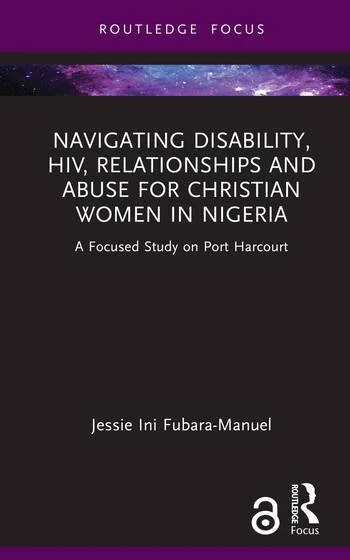
Navigating Disability, HIV, Relationships and Abuse for Christian Women in Nigeria contains poignant stories of formidable women who, because of their gender and disabilities, were sexually assaulted and infected with HIV by people known to and loved by them. Focusing on the Christian women of Port Harcourt, Nigeria, the book brings together the often under-represented voices of women with disabilities and HIV in an under-researched area of Nigeria.
Fubara-Manuel builds on long-term ethnographic research to bring together the isolated cases of disability, HIV, gender-based violence and Christianity in sub-Saharan Africa. In so doing, she critically examines the perpetuation of rape culture and the role of faith communities and support groups in shaping women’s responses. The author’s work moves beyond victimhood frameworks to document the agency of women living with both disability and HIV, and their resilience and faith-based solidarities as resources for survival, resistance, and liberation from abuse.
The book advocates a conversation between men and women for the dismantling of patriarchal structures that promote and legitimise the rape culture perpetrated against women by men. By integrating lived theology, gender analysis, and disability studies, this book advances existing literature through relational and narrative-driven accounts that re-centre marginalised voices and rethink the role of Christian faith in contexts of sexual violence.