
Review: Theology as Threshold

Invitations from Aoteoroa New Zealand ed. Jione Havea, Emily Colgan, and Nāsili Vaka'uta
Reviewed by the Rev Dr Chris Swift, CEO of Leeds Church Institute
Whenever I travel, I like to read something that has come from the context I’m visiting. It might be a novel, or a history – whatever catches my eye. During my recent (and first) visit to Aotearoa New Zealand I downloaded this publication. Its title attracted my attention immediately, as liminal spaces and practices have long been a theme in my work in health and social care chaplaincy. Any ‘threshold’ is an intriguing point of separation and change, exploration and reflection.
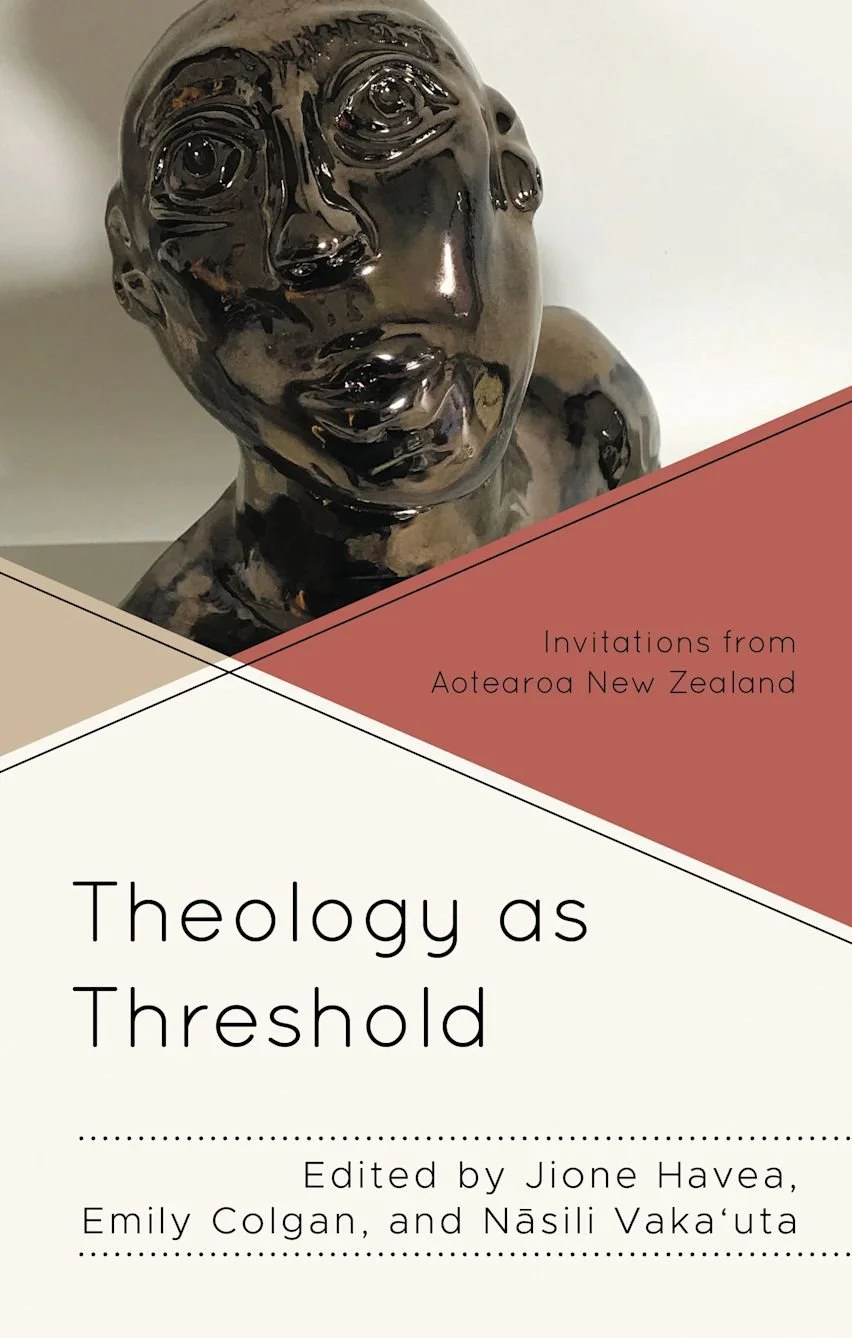
The book is subtitled ‘invitations from Aotearoa New Zealand’, and it is indeed an inviting and challenging collection of theological work. Supported by Trinity Methodist Theological College and the Methodist Church of New Zealand (Te Hāhi Weteriana o Aotearoa), this publication is a collaborative response to environmental racism, and other forms of violence. It emerged out of meetings held for theologians in this region of the world, where the commitment, anger and resolution of indigenous people was expressed. A major focus of these encounters and the book is the rejection of the authority of Western theology and its ‘models of theology which pretend to exist above or beyond contextual concerns’.
From my perspective, the challenge of a theology arising from the culture and experiences of indigenous people is considerable. What I read describes a different experience of being in the world, where the fragmenting and dissecting models of much Western thought are alien and damaging. The interconnectedness of humanity, God and creation play a central role in the theologies described and explored in this book. The authors of the book, reading the Bible from unique perspectives, find strong theological grounds to affirm the need for the healing of creation while ‘breaking the unfettered progress and unquestioning consumption of Earth’s resources.’
The book is divided into two main sections: ‘(Re) Locating Theological Studies’ and ‘Nativizing Theological Studies’. The first contains eight chapters, which include a diverse range of themes, such as exploring margins as threshold, gift exchange, and sexual abuse. Emily Colgan and Caroline Blythe address Biblical ‘Texts of Terror’, in relation to a ‘global rape culture, where gender violence is regarded as an inevitable, even acceptable, feature of our social and cultural lives’. In their analysis, certain Biblical texts have been used uncritically to sustain gender violence. A major concern is how to create safe spaces in theological education for this topic to be explored. As they note, ‘The Bible is a violent book’. It contains accounts of gendered aggression and abuse, wartime rape, and sex slavery (their list is longer). Rather than being dismissed as anachronistic, Colgan and Blythe argue that stories cannot be separated from actions, and that there is much more resonance between elements of Scripture and gender violence than many would like to think. Rather than dismissing these serious issues, they propose that a proper understanding of the Bible requires us to confront its entirety, not only those passages that populate the lectionary.
In considering how to address these issues in a teaching context, they recognise the personal experiences which students may carry. There may also be unidentified perpetrators of gender violence in the class. However, they argue that theological education fails in its duty of care to the wider public if it does not address these parts of the Bible or seek to question attempts at ‘interpretive gymnastics to sanitize the text’.
In the second section, Dr. Te Aroha Rountree explores the impacts of colonisation on the Maori. They consider the costs of a theology of the incarnation that lays great weight on the ‘whiteness’ of the Jesus the West has promoted. In considering this they ask what it would mean for Jesus to be with the colonised, rather than the colonisers. As with the use of Scripture to justify gender violence, Dr. Te Aroha Rountree examines the ways Western theology has been deployed to oppress and impose. The image on the cover of the book, created by an artist of Ngā Puhi and Scottish descent, prompted reflections about Ihu Karaiti (Jesus Christ) in the context of colonisation. What the missionaries brought was a Christ ‘dressed in the colonial attire of Europe’, and the Māori were treated as ‘the unfortunate other’, requiring British intervention and governance. Theologically, there is a complex task to see Ihu Karaiti (Jesus Christ) as one of the colonised, rather than the coloniser. This native Jesus comes among us ‘bare, naked and unincumbered’ – dismantling systems of empire. It is an activist theology.
This is a challenging and important book that is relevant far beyond Aotearoa New Zealand - not least for the colonisers whose influence is still alive. Reading the Bible with awareness of how it has been used to support sexual violence, as well as recognising the European habit worn by the Christ of the missionaries, is to find ourselves on the threshold of new understanding. Importantly, it is together that we will discern more fully the character of Christ, and in our recognition of one another that we become more wholly the people God calls us to struggle to be.